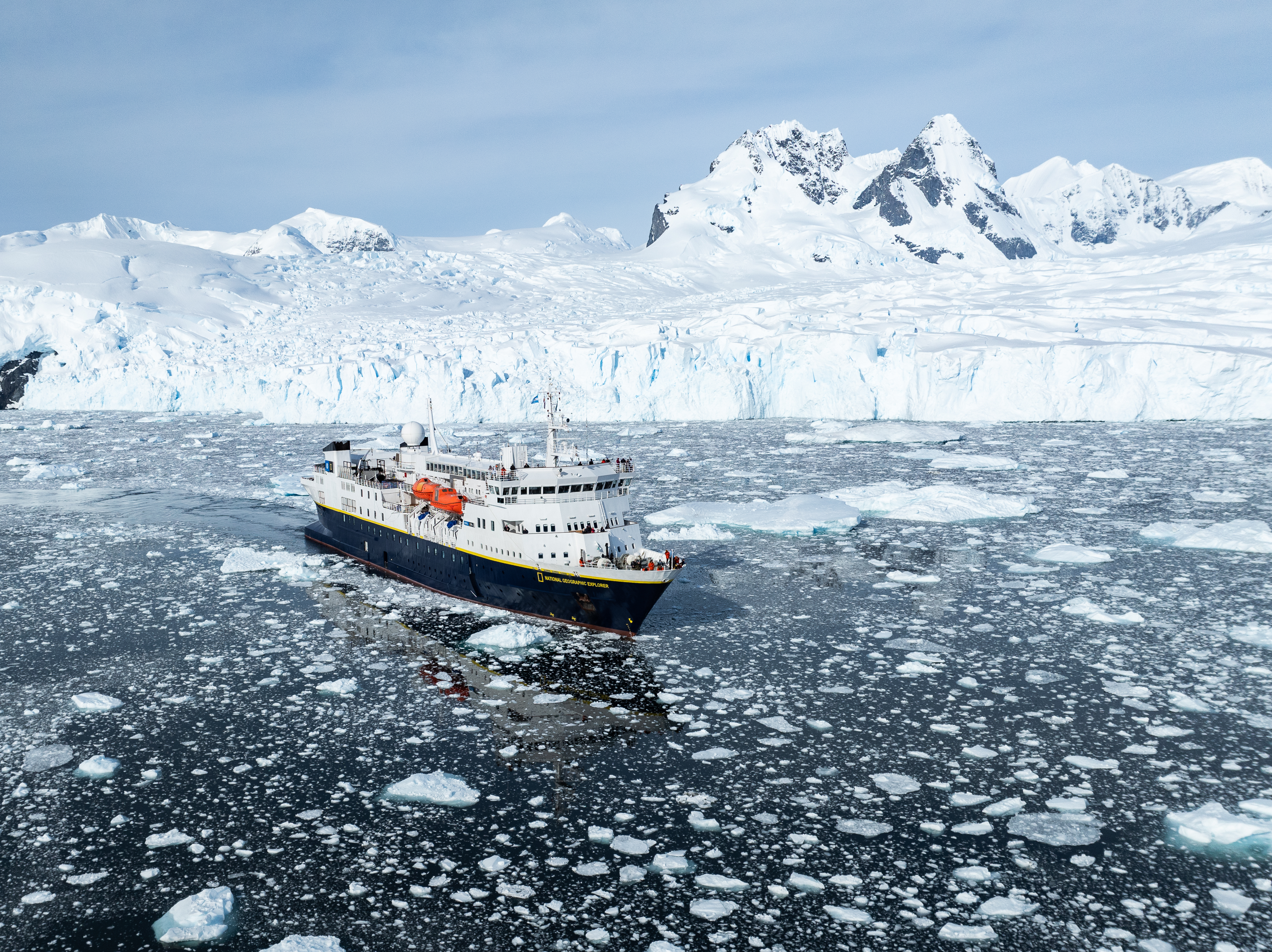
I'm not particularly prone to seasickness. In fact, I've been lulled to sleep by the rock of a ferry more times than I can count. But the notorious Drake Passage is an open-water crossing like no other. The 500-mile stretch of ocean looms between the tip of South America and Antarctica and has a reputation for being home to the roughest seas in the world. So the idea of crossing it twice on a round-trip expedition sailing from Ushuaia, Argentina, to Antarctica made me a touch nervous.
Fortunately, a sail-and-fly cruise — which is available on several cruise lines — allows passengers to skip one and sometimes both Drake crossings that are normally required for the round-trip to and from Antarctica. So when National Geographic-Lindblad Expeditions offered the option to sail one way and fly back via an Antarctica Direct 10-day journey on the Explorer for the first time this season, I jumped at the chance. I braved the passage once but boarded a short-haul aircraft from the tiny Teniente Rodolfo Marsh Martin Airport on King George Island in Antarctica back to Puerto Natales, Chile, instead of facing it again on the way back to Ushuaia.
That meant instead of two three-day crossings with no stops to enjoy the scenery on the choppy Drake when traveling both ways, I enjoyed a short two-hour flight on the way back. It did mean luggage restrictions were stricter, but it felt like a small price to pay.
That's because the Drake Passage may be the shortest distance to the frozen southernmost continent, but it's rarely the most pleasant. The Southern Ocean rushes in an uninterrupted ring above the continent and as it circles it must squeeze through the narrow chute known as the Drake. And when that much water is forced through a too-small space, seas get rough: average swells are 13-15 feet high (though waves as high as 65 feet have been reported).
So despite my propensity to handle rocking ships with aplomb, I popped motion sickness meds an hour before departure; No way was I risking spending three days feeling nauseated — or worse.

But we were lucky to experience following winds and seas — both the wind and currents helping push us along — which meant we made it across the passage in just over two days, each filled with lectures on ocean science and seabirds and chef-prepared meals. We also enjoyed a phenomenon called the "Drake Lake" (as opposed to the "Drake Shake") with swells only 10-11 feet high.
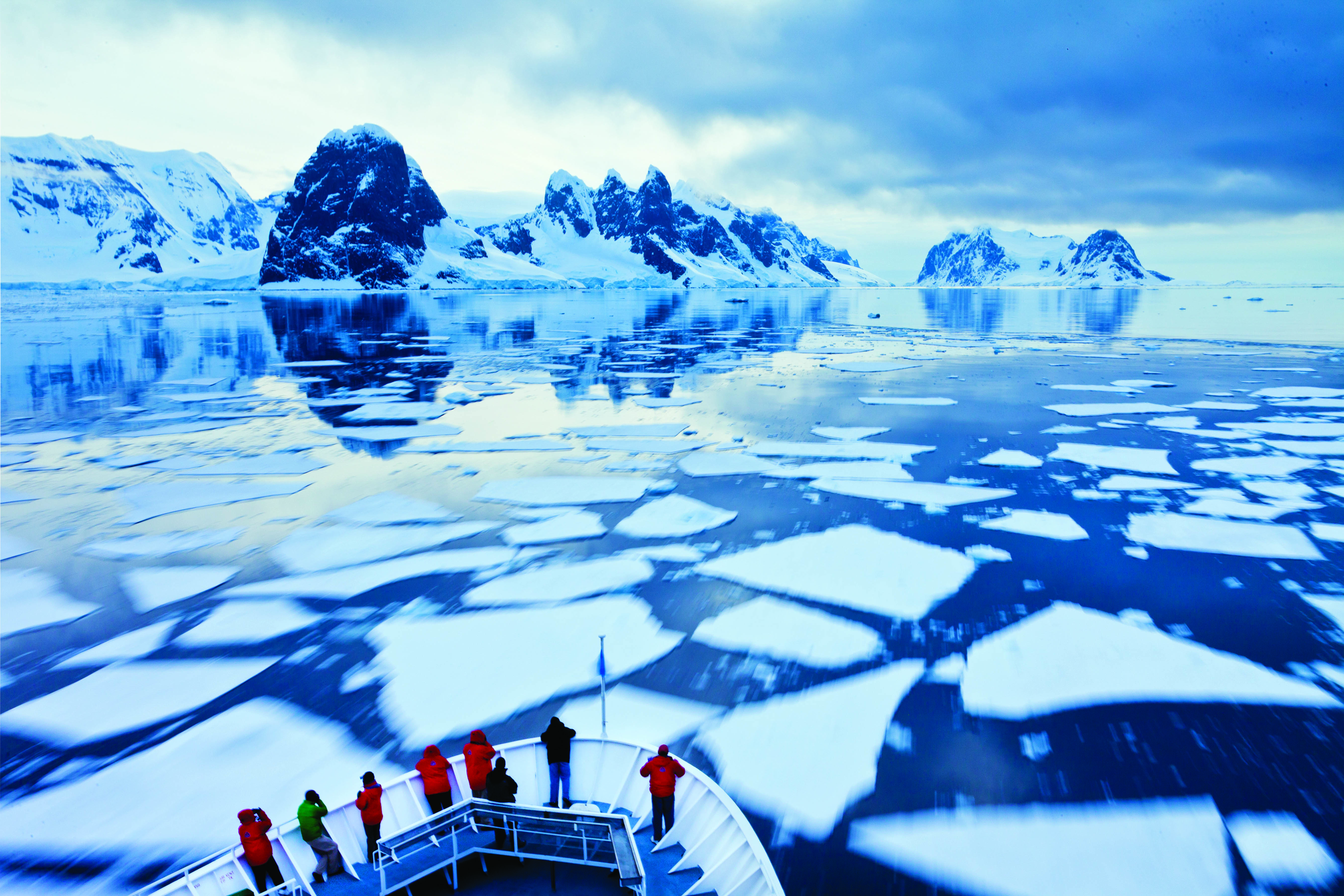
As a result, while my head felt swimmy and my stomach a touch on edge during the crossing, I was able to enjoy the fine cuisine in the dining room and marvel at the majesty of my surroundings. Mountains were alternately soft and sweeping. Snow and ice was carved by wind into the sort of shapes not usually found in nature. A contrast of black rocks and brilliant snow provided a perfect representation of this place, which is stark and beautiful at once.

During landings, often all I could hear was the soft tap of water on the shore, the wind whipping past my ears, and the occasional braying of gentoo penguins. There's a feeling of vastness and wilderness that can hardly be described, of a place wild and untamed, which just adds to the continent's allure.
There were also chinstrap penguins, which were unperturbed by my presence, and my eyes welled with joy as I watched them hop, waddle, and trip over uneven snow to select pebbles for their nests and follow one another up hills that seemed too steep for their short legs. And I was glad for my short flight to Chile instead of spending two more days crossing the open ocean and risking a second, potentially tumultuous Drake crossing. My stomach was, too.
Other Antarctica Sail-and-Fly Options

National Geographic-Lindblad Expeditions is only one of a few cruise lines to offer a sail-and-fly option that skips one or both trips across the Drake Passage, usually on a four-engine regional plane. Multiple routes are available, but guests will typically overnight in Puerto Natales, Chile, on the way back.
Aurora Expeditions offers several fly-and-sail itineraries and fly-only itineraries to and around Antarctica and/or the Falklands that last from nine to 21 days. Travel is usually between Ushuaia, Argentina, and/or Punta Arenas, Chile. Flights are about two hours.
Silversea also has several Antarctica Bridge cruises (usually flying from Punta Arenas, Chile, to King George Island, Antarctica): these sailings are of various lengths, and several offer the option to skip the Drake passage altogether and fly both ways if you're especially ill-disposed to seasickness.